-
CAD vs. PDF: Why Your Floor Plan Is Costing You the Design
CAD vs. PDF: Your Floor Plan Is the Design | WirelessWithWade WirelessWithWade CWDP | Wireless Design CAD vs. PDF: Your Floor Plan Is the Design A PDF looks like a floor plan. It is not a reliable RF design source. Wade Gerencser There is a conversation happening right now about wireless design efficiency. Nobody in…
-
Wi-Fi 7 Is Fast. But Is Your Wireless Architecture Actually Secure?

Wi-Fi 7 Is Fast. But Is Your Wireless Architecture Actually Secure? | WirelessWithWade WirelessWithWade / Technical Blog 802.11be · Wi-Fi 7 · Cisco 9800 · WLAN Architecture · Security Wi-Fi 7 Is Fast. But Is Your Wireless Architecture Actually Secure? Encryption is a feature. Architecture is a discipline. The security gap in most enterprise wireless…
-
Why Your Wireless Gaming Router Isn’t a Network Upgrade

WirelessWithWade / Technical Blog Consumer Wi-Fi · Enterprise 802.11 · RF Design Why Your Wireless Gaming Router Isn’t a Network Upgrade Key Takeaways Consumer gaming routers sell speed on the box. Power, coverage, and capacity are three separate RF problems, buying hardware solves none of them by itself. Signal bars are a UI decoration, not…
-
The Open Wi-Fi Network Is Finally Encrypted: Understanding OWE on Any Band
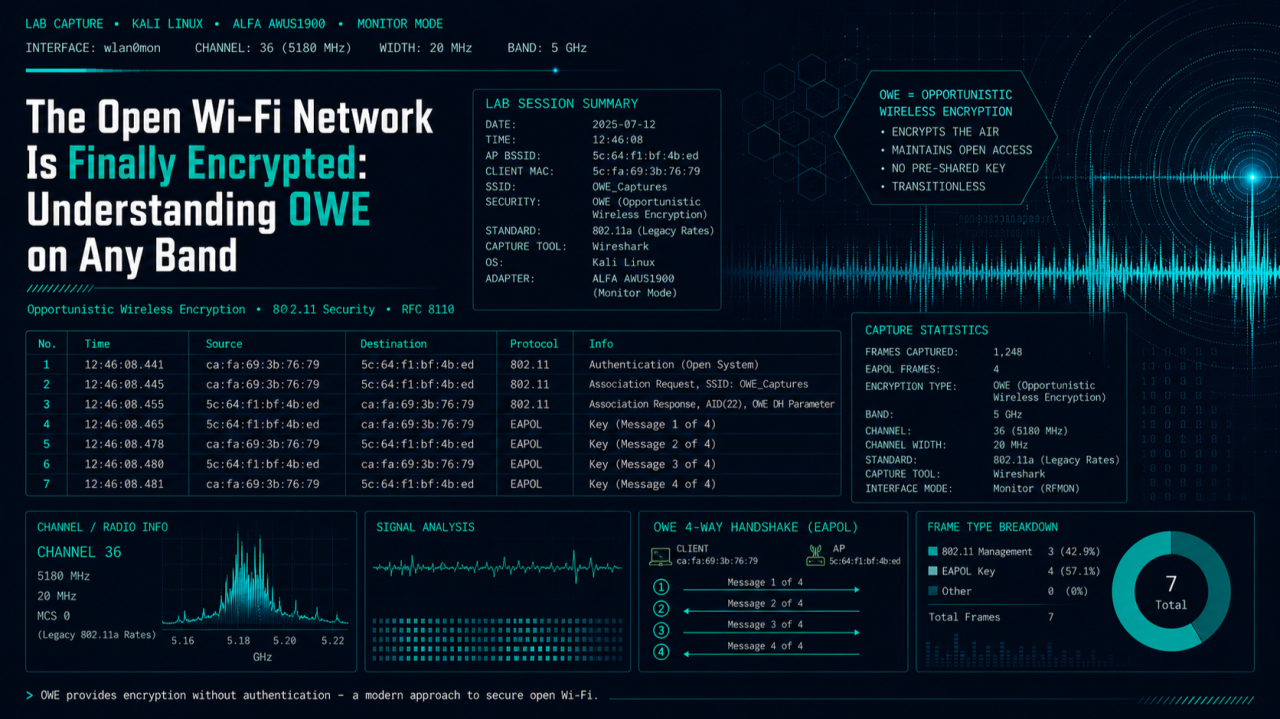
WirelessWithWade / Technical Blog 802.11 Security · OWE · Enhanced Open · Wi-Fi 6E The Open Wi-Fi Network Is Finally Encrypted: Understanding OWE on Any Band Open Wi-Fi no longer has to mean unencrypted. OWE gives every passwordless client its own Layer 2 session keys on 2.4, 5, and 6 GHz. Here is how it…
-
Squeezing the Most Out of Our 5 GHz SSIDs: Optimizing During the 6 GHz Migration Era

-
Separate AKMs Between SSIDs: Why WPA3 “Transition Mode” Shouldn’t Be a Permanent Design
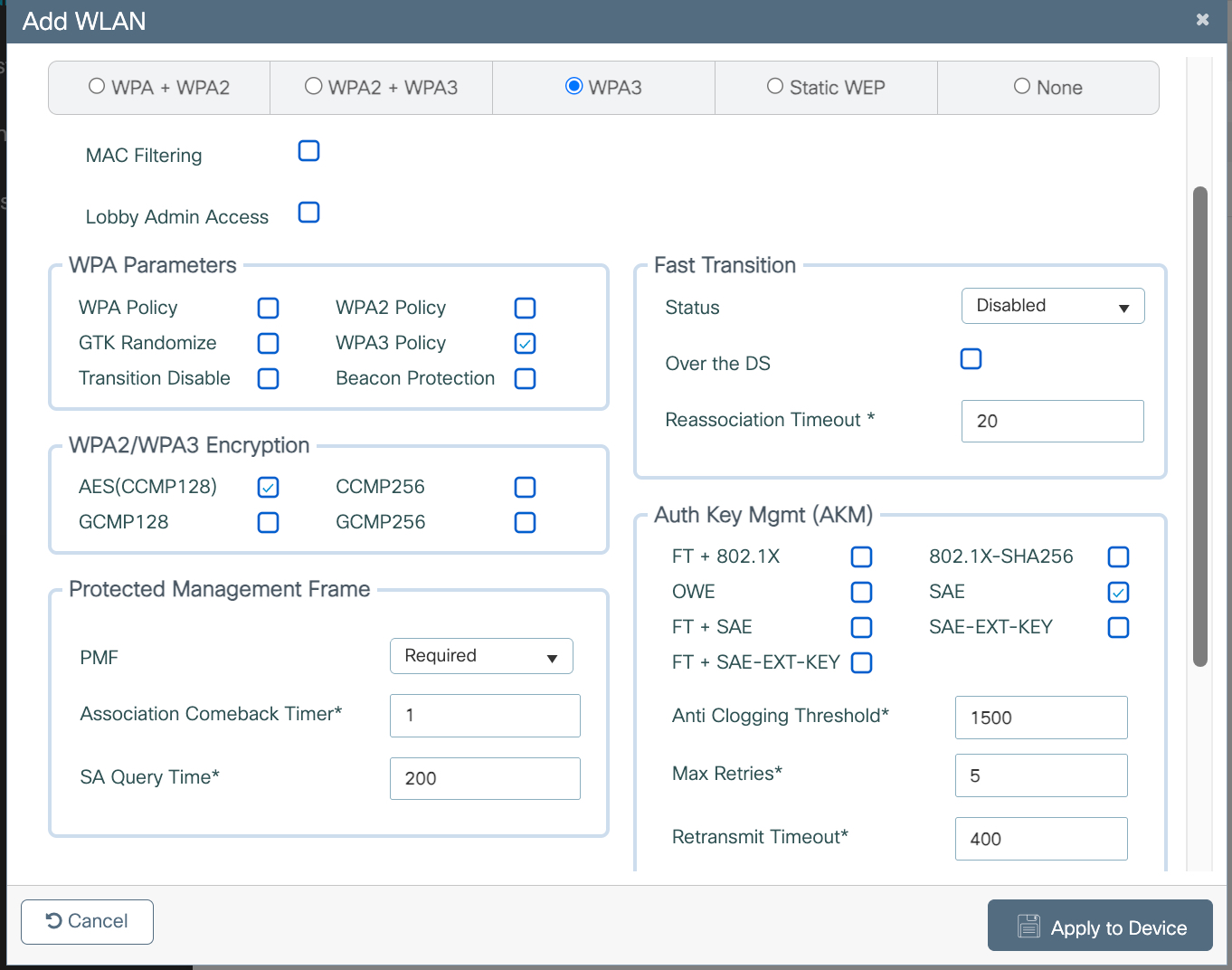
WirelessWithWade / Technical Blog 802.11 · WPA3 · Security · Enterprise Wi-Fi Separate AKMs Between SSIDs: Why WPA3 “Transition Mode” Shouldn’t Be a Permanent Design Mixing WPA2-Enterprise and WPA3-Enterprise AKMs on the same SSID preserves the legacy attack surface and introduces unpredictable client behavior. Here’s why AKM segmentation is the right call. Key Takeaways WPA3…
-
I Ran a Deauthentication Attack Against My Own Wireless Network; Here’s What the Frames Show
WirelessWithWade / Technical Blog 802.11 Security · 802.11w · CWSP Deep Dive I Ran a Deauthentication Attack Against My Own Wireless Network;Here’s What the Frames Show. 802.11w PMF Required, decoded frame by frame, live attack, live capture, and exactly where protection gets negotiated inside the RSN Information Element. IEEE 802.11w · IEEE 802.11-2020 Key Takeaways…
-
Cisco 9800 FlexConnect Local Switching – Policy Profile Walkthrough
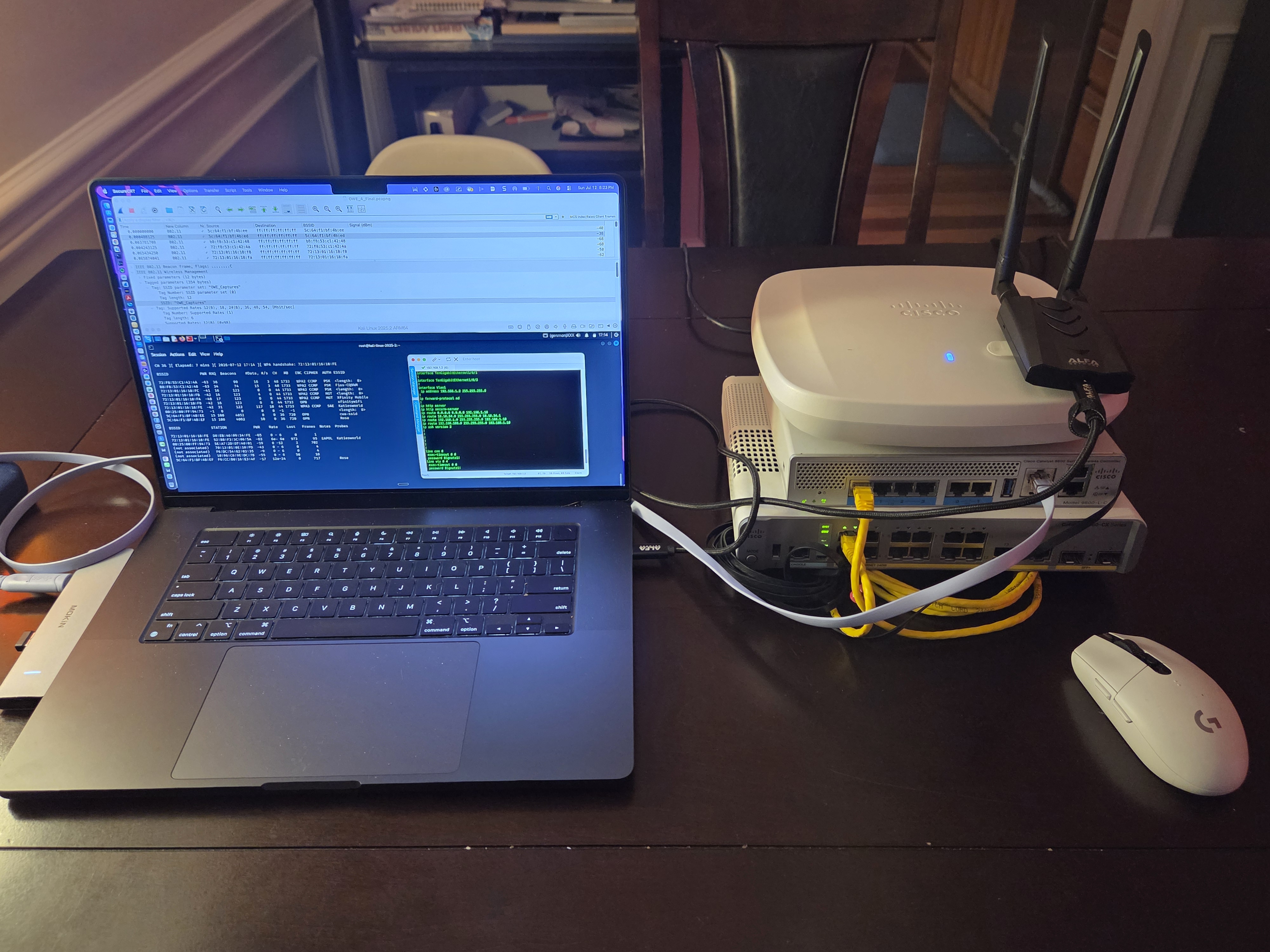
WirelessWithWade / Technical Blog FlexConnect · Cisco 9800 · IOS-XE · WLAN Design Cisco 9800 FlexConnect Local Switching – Policy Profile Walkthrough FlexConnect on the Catalyst 9800, built by hand: WLAN profiles, policy profiles, policy tags, site tags, and Flex profiles, and how they decide local vs. central switching at the AP. Key Takeaways On…
-
Why OWE and WPA3 Need to Take Over
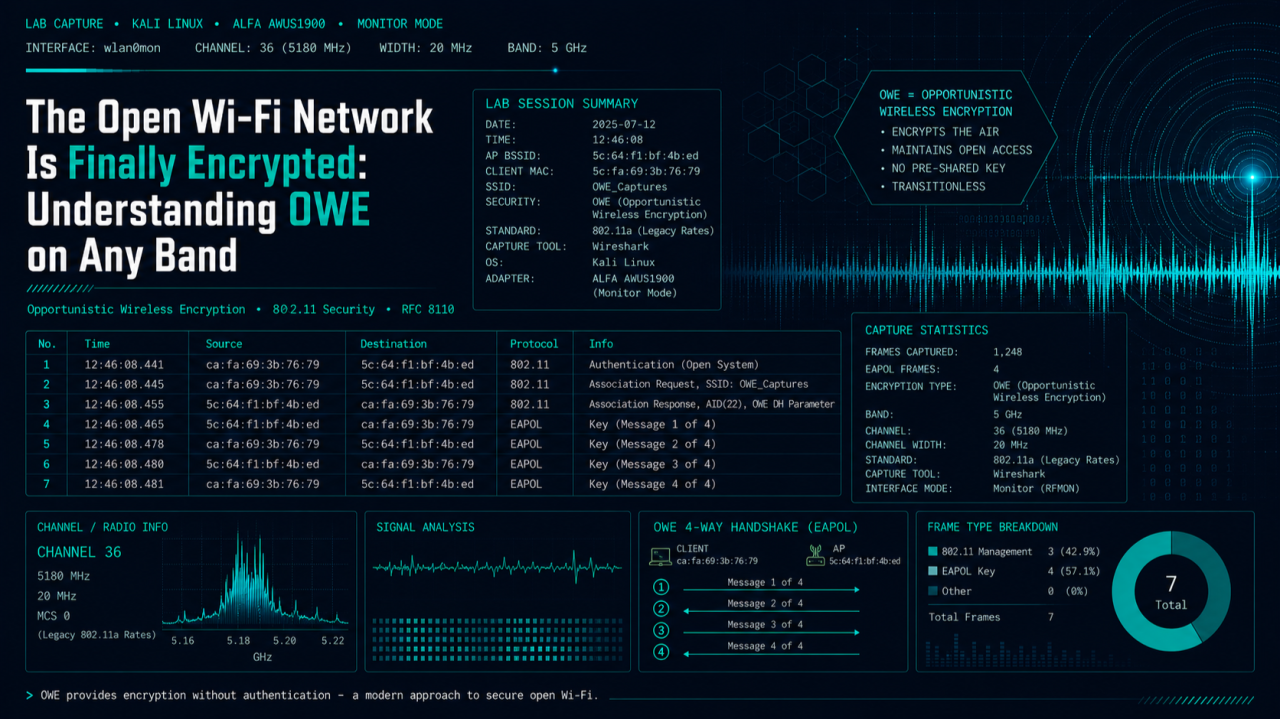
WirelessWithWade / Technical Blog 802.11 · WPA3 · OWE · Security · Kali Linux Why OWE and WPA3 Need to Take Over WPA2 handshake capture and offline cracking remain practical attacks. This post covers why SAE and OWE eliminate the attack chain, and why the industry needs to finish the migration. Key Takeaways WPA2-PSK is…
-
Why Understanding 802.11 MCS Index Rates Drive Accurate AP Density Planning
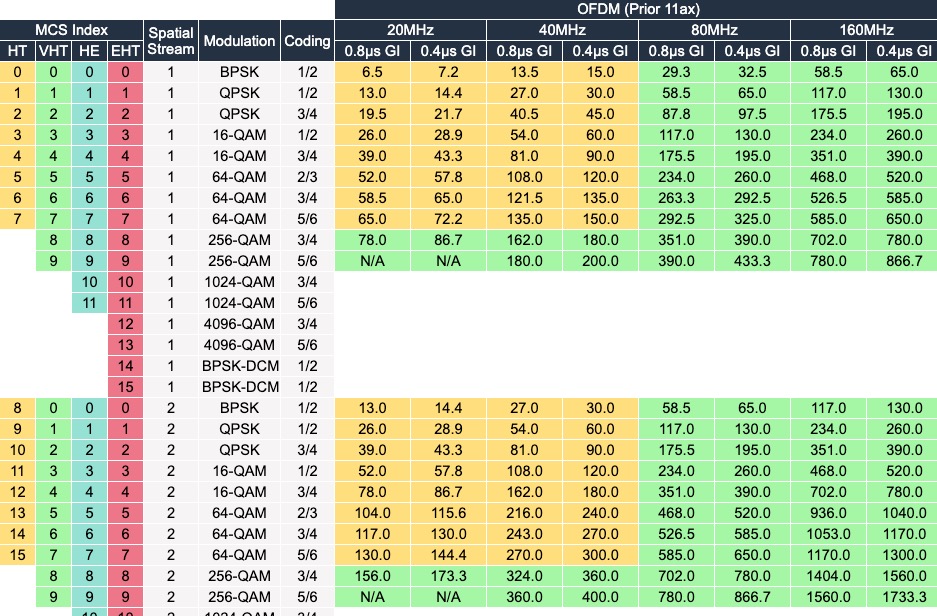
WirelessWithWade / Technical Blog 802.11 · MCS Index · RF Design · WLAN Engineering Why Understanding 802.11 MCS Index Rates Drive Accurate AP Density Planning MCS is the PHY layer’s truth. If you don’t design backward from it, you’re placing APs by instinct, not physics. Key Takeaways The MCS index encodes modulation order, coding rate,…